

The Return of Rest
On How Division Keeps Us Restless

What if exhaustion is not coming from the world itself, but from the ways we stay divided within it?
This reflection looks at division, defense, and the return of rest as a sign of inner coherence.
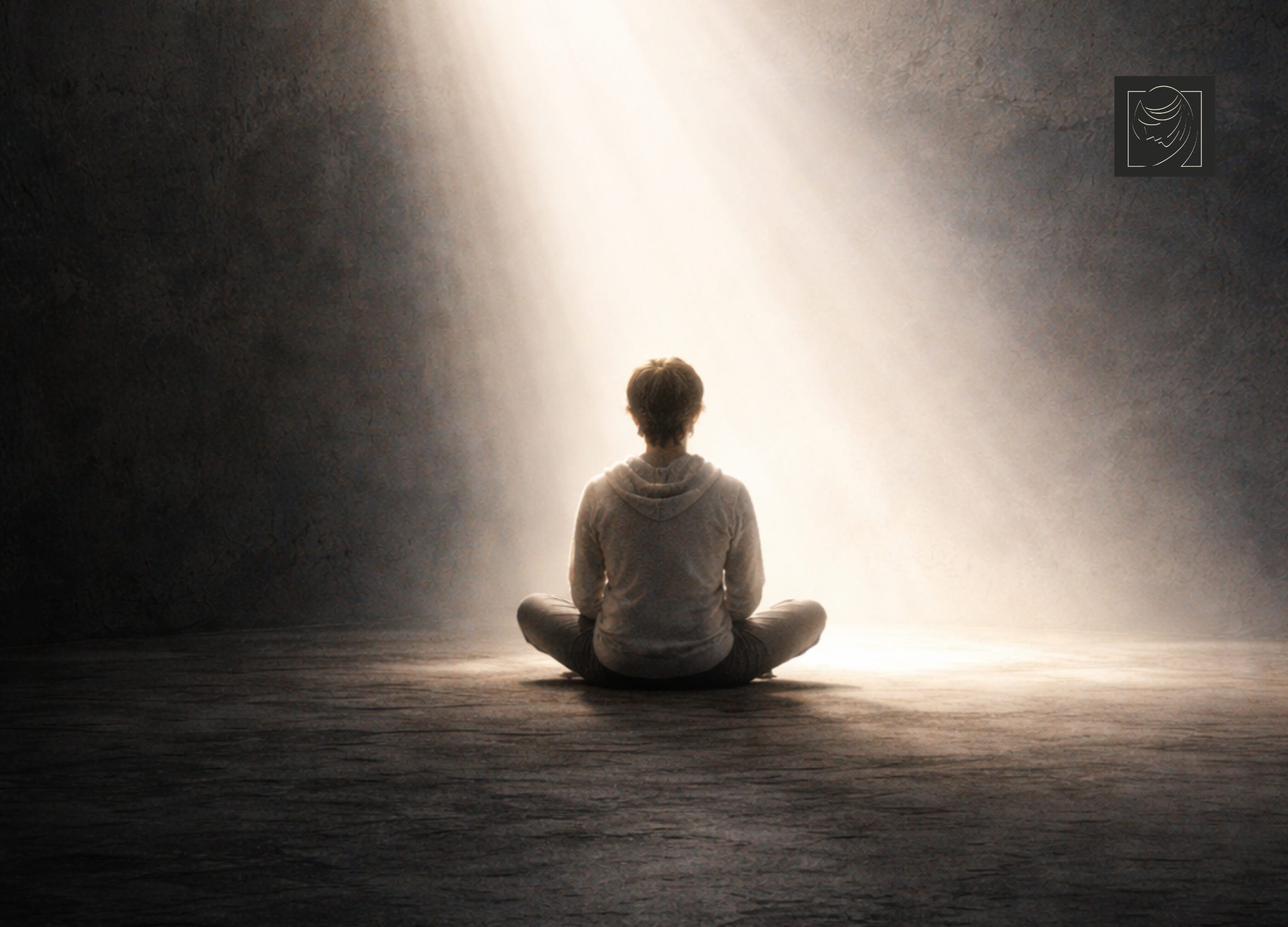
Lately, I’ve noticed something. There are moments when an unannounced rest settles into my body. I’m not meditating or doing anything spiritual. It just happens for a few seconds. This began during meditation a couple of years ago, and I’ve called it by different names. Now I simply call it rest. When it happens, I pause. It feels like a part of me returning to my body. I allow myself to experience those moments. They inevitably end too soon, when my mind starts running the show again.
With this rest, I’ve become aware of something that has been there all along, though I was too immersed in it to notice. I’ve begun to feel division, not as an abstract concept but as something tangible. In the same way I feel rest, I feel the exhaustion caused by division in my brain and in my body. Division takes effort.
During the recent political campaign in my country, that effort became obvious. Division came with fear, with the need to stay vigilant and defend what I felt needed defending. I found myself arguing online with people who see the world differently, while also fighting myself, restraining my responses out of fear and monitoring how I came across.
That took effort. It was depleting.
We experience division everywhere: in politics, in culture, in class and status, in race and ethnicity, in the workplace, and in family dynamics. We notice it in the subtle bracing before opening a news app, in the anticipation of ideological clashes in our social media feeds, and in the way a conversation turns into a position and a position into an identity. It’s everywhere. It asks us to pick a side. Even our right to exist can feel like something to argue for. What surprises me now is that I hadn’t noticed how tiring it is.
We’re so used to it that it feels normal. But once we start paying attention, we can sense its footprints in the body: the tight jaw, the racing heart, the shallow breath. We’re living in a time when division feels like the air, and we breathe it in without realizing it.
It can feel responsible to stay charged. Defending what matters may feel necessary. But what’s the real role of division?
What happens outside often echoes what we hold inside. When we become observers of our inner experience, we begin to notice the split. Parts of us pull in different directions. The mind feels scattered. The body feels resistant. A part of us seems to step out of the room for air. We are fragmented. Maintaining that fragmentation is as draining as the division we experience outside.
To be fair, division has its place. It clarifies. It helps us orient. It tells us who we are by telling us who we’re not. It can create belonging and give us a cause to fight for. There’s a charge to it, a pulse of righteousness, and a sense of certainty in a complicated world. If division only exhausted us, we wouldn’t keep participating in it. There’s a payoff.
But I’ve started to notice the cost. After the charge fades, the body stays tense. The mind replays conversations long after they’re over. The nervous system doesn’t settle easily. What felt like aliveness turns into depletion. The exhaustion isn’t coming from disagreement. It’s coming from defense, and defense requires maintenance. Rest, by contrast, only requires letting go.
When rest settles, it feels like a momentary wholeness, an alignment. It’s as if what I’m made of returns to the body and stays for a while. In those moments, it feels safe to be with myself.
It may seem strange to frame rest and division as opposites. But when I pay attention to my body, I see how one requires constant maintenance and the other doesn’t. Division keeps us busy. It’s reinforced by systems and structures that, by design or by habit, make us sort, rank, and separate. We learn to adapt to them and internalize their pace, expectations, and language. Over time, we begin to mirror them within ourselves. We defend positions that keep us tense. We follow patterns that keep us scattered. We give our power away in subtle ways because that’s how we learned to function and belong. Yet something in us keeps reaching for coherence, for the place where we can rest and belong within our own body.
Unlike division, true rest isn’t something we do. It’s the by-product of removing what stands between us and that coherence. It waits for us to see what’s false, what’s inherited but no longer true, what we’ve carried out of habit or fear, and what once kept us safe but has now become a burden. When those layers loosen, what’s real finds space to settle. The body opens. The nervous system relaxes into it, even when it can’t name it.
There’s a quote that makes a lot of sense to me now:
Your task is not to seek for love, but merely to seek and find all of the barriers within yourself that you have built against it. It is not necessary to seek for what is true, but it is necessary to seek for what is false.
— A Course in Miracles, T-16.IV.6:1–2
I’ve begun to feel that some forms of inner division are exactly those barriers.
Even though rest now arrives spontaneously at times, it didn’t always. I see it as the result of years of healing work, noticing the narratives I carried and the roles I performed to belong, to be safe, and to be right, and diving into my own underworld to become aware of beliefs and traumas that kept me in fight, flight, or freeze.
Many of the ways we divide are intelligent adaptations shaped by family, culture, and trauma. For some of us, staying divided internally was how we survived. Loosening those patterns can take time, support, and patience. There’s nothing simplistic about it. But at some point, we begin to notice the toll: always scanning, correcting, preparing to counter. It may feel like participation, like engagement, or like being a good citizen. And yet, if we pause, the body shows us the truth.
I’m not done with that work. But there’s space now within me to receive what I’ve called, at different times, peace, love, coherence, truth, grace, or simply rest. They no longer feel separate. They feel like different names for the same alignment, where I’m no longer defending myself or distorting who I am to belong, and where my thoughts and my body move in one direction. However I name it, the body recognizes it as rest.
I’m not suggesting we eliminate disagreement or pretend we all see the world the same way. Coherence isn’t sameness. The rest I’m writing about doesn’t require silence or passivity. It might require finding what keeps us quarreling with ourselves, naming those parts for what they are, and reclaiming our power to integrate them and choose a more coherent experience.
Division isn’t the enemy. If we let it, it can become the contrast that helps us recognize that we’re meant to live in ease, not exhaustion. With that awareness, our choice becomes visible.
Sometimes the shift is as small as that.
Human First Journal is devoted to exploring the human experience at the center of what unfolds around us. The world may divide, but our capacity for awareness remains a place of return.
Beautiful article! Thank you. I love ACIM and it was startling and also very sweet to see you quote it. I understand what you are talking about and I agree completely. Thank you for sharing. This is a very very important thing for us to understand, I believe.